
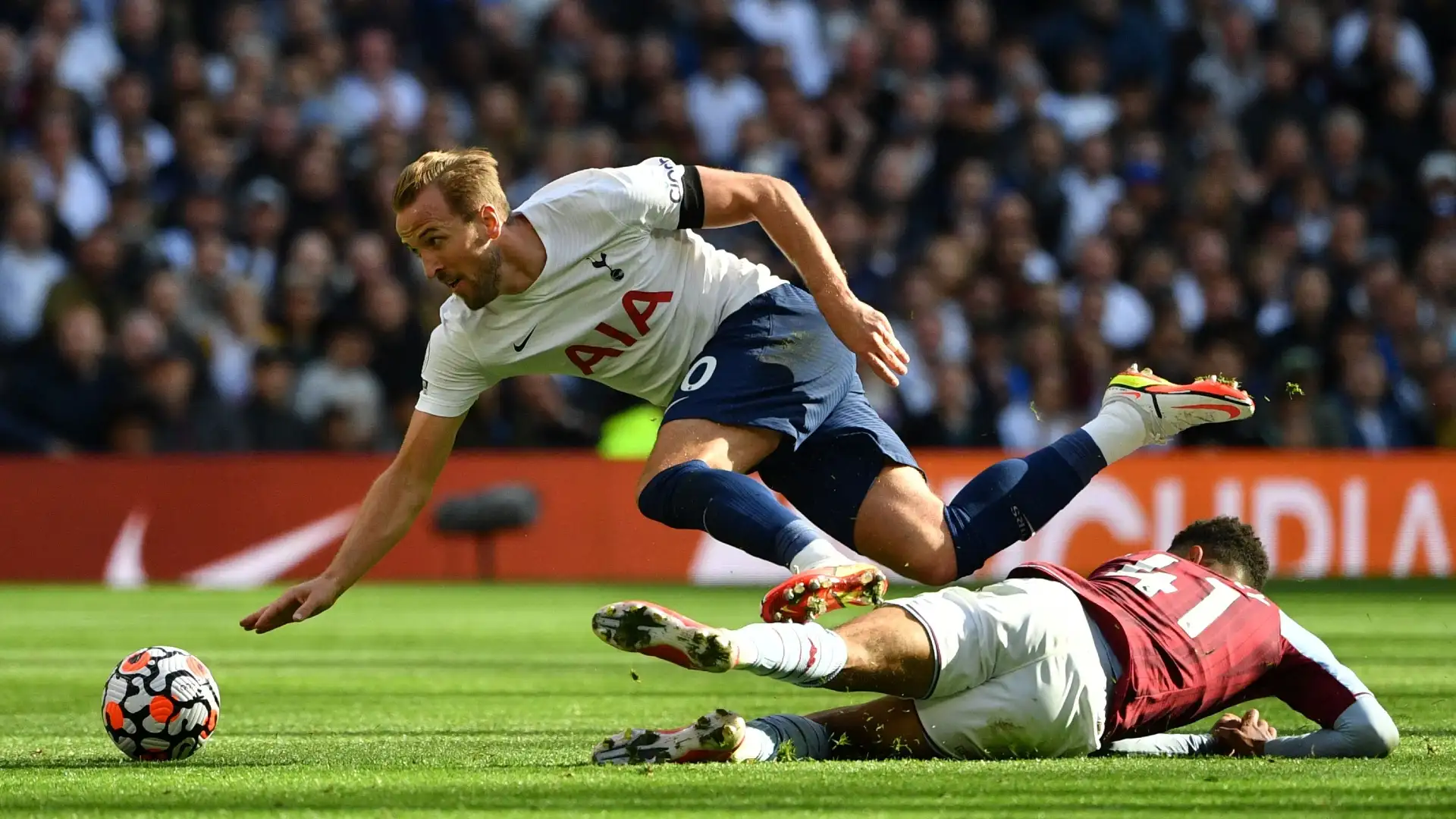
Every striker who has played a full season has gone six or seven games without scoring, and most have gone longer. It happens to players in form, players out of form, expensive signings and academy graduates. From the stands it looks like a loss of ability, which is almost never what it is. A drought is usually several ordinary things stacking up at once.
Understanding why they happen is useful beyond idle curiosity. It changes how you judge a signing after ten games, and it explains why managers keep picking a forward who has not scored since August. The honest answer is that goalscoring is a low-frequency event, and low-frequency events are noisy.
Scoring is rarer than it feels
A good Premier League striker scores somewhere between fifteen and twenty-five league goals in a season. Spread across thirty-plus appearances, that is well under one a game. A striker who scores every other match is having an excellent year.
Once you accept that baseline, droughts stop looking strange. If a player’s true rate is one goal every two games, then a run of five blanks is not a collapse — it is the kind of sequence you would expect to see two or three times a season purely by chance. Flip a coin ten times and you will often get a stretch of four tails. Nobody concludes the coin is broken.
Chance quality matters more than chance volume
The more useful question is not how many shots a striker is taking but what kind. A forward getting six shots a game from twenty-five yards is having a worse time than one getting two from inside the six-yard box, even though the first looks busier.
This is where droughts often begin, and it usually has nothing to do with the striker. If a team loses its best crosser to injury, or switches to a system that keeps the full-backs deeper, the supply of close-range chances dries up. The forward is still making the same runs into the same spaces, but the ball stops arriving. His numbers fall, and the conversation turns to his finishing.
Why does a striker’s finishing look worse during a drought?
Partly because it genuinely is, and partly because of how we count. Finishing fluctuates around a player’s true level, and over a sample of fifteen or twenty shots that fluctuation is large. A striker who normally converts one chance in six can easily miss twelve in a row without anything having changed.
The other half is psychological, and it is real. A forward who has not scored in a month starts taking the extra touch, or shooting earlier than he would, or looking for a pass that is not there. Both effects feed each other: bad luck produces hesitation, hesitation produces worse shots, worse shots extend the run.
Penalties and set pieces distort the picture
One more thing muddies the comparison. A striker who takes his side’s penalties will outscore an equally good forward who does not, by five or six goals across a season, without being any better at the part of the job that happens in open play. Lose the penalty duty to a new signing, or play for a team that wins fewer of them, and the goal column falls on its own.
Set-piece involvement works the same way. A tall forward at a club with a good corner routine picks up goals that have little to do with his movement or his finishing in the box. When the delivery gets worse, or the coach who designed the routine leaves, those goals go with them. None of this is visible in a headline tally, which is why a drop from eighteen goals to eleven can happen to a striker who is playing exactly as well as he did the year before.
Role changes hide behind the numbers
A striker’s job description can change without anyone announcing it. A new manager might want the forward dropping into midfield to link play, or holding the centre-backs to create space for runners, or pressing the goalkeeper rather than sitting between the centre-halves.
All of those jobs are valuable and none of them produces goals. A forward asked to do the work that lets a winger score fifteen will see his own tally fall, and if you only look at the goal column you will conclude he has declined. This is why managers sometimes defend a forward who has not scored for weeks: they are judging him on the role they gave him, not the one supporters assume he has.
Fatigue and fixture load
Finishing is a fine motor skill performed under pressure, and it is one of the first things to suffer when a player is tired. Late in a congested run of fixtures, the half-yard of acceleration that separates a clear sight of goal from a blocked shot disappears, and the composure needed to pick a corner goes with it.
Accumulated load works the same way across a season. A forward who played a summer tournament, started pre-season late and then played every three days through autumn is a different player by November, even if nothing is wrong with him. Rotation is not a luxury here, it is maintenance.
How long should a drought last before it is a worry?
As a rough guide, a run becomes genuinely interesting when the underlying numbers move rather than just the goals. If a striker is still getting into the same positions and taking the same quality of shots, the goals almost always return. If the chances themselves have dried up, something structural has changed, and that is worth looking at.
Age is the other signal. A drought at twenty-four is usually noise. The same drought at thirty-four, accompanied by fewer sprints and fewer touches in the box, may be the start of a decline. The pattern matters more than the number.
What breaks a drought
Usually something unremarkable. A scruffy goal off a shin from two yards, a penalty, a tap-in after a goalkeeping error. Strikers talk about this constantly, and the reason is that the first goal resets the decision-making. The extra touch disappears, the earlier shot comes back, and the next three weeks look nothing like the last six.
Managers can help by simplifying the job — fewer defensive duties, more time in the box, a reliable supply from wide — and by not substituting the forward every time he misses. A striker who knows he has eighty minutes plays differently from one who thinks he has twenty to prove something. It is a similar problem to the one we look at in what makes a good penalty taker, where composure is most of the skill.
Frequently asked questions
Do goal droughts affect a striker’s market value?
Less than you would think, if the underlying performance holds up. Clubs look at shot locations, chances created and physical data as well as goals, and a forward who is getting into good positions without scoring is often seen as a buying opportunity.
Can a change of club end a drought?
Sometimes, because a different system can restore the supply of chances. But a forward who was struggling because of fatigue or a loss of sharpness will take that with him. The move helps when the problem was structural, not physical.
Is it true that strikers score in runs?
The evidence for genuine hot streaks is weak. What is real is that goals cluster when the team is creating well, so a forward’s good spells tend to line up with his side’s good spells. Whether a shirt helps is another question, and our guide to which Manchester United season to buy is more useful on that front.
Leave a Reply