
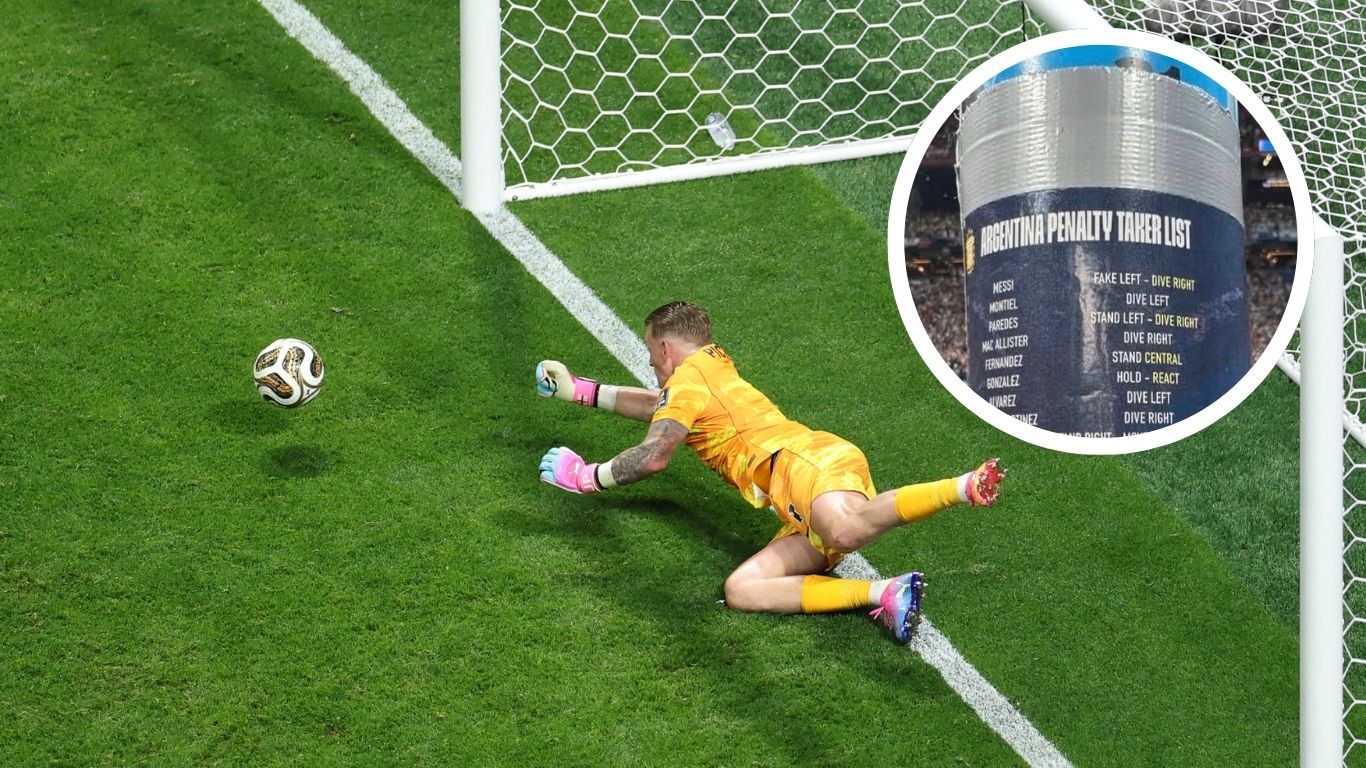
A penalty is the simplest situation in football and the hardest to get right. Twelve yards, no defenders, a stationary ball, and a conversion rate across the top European leagues that sits a little under eighty per cent. One shot in five is missed, by professionals, from a spot they have practised from since childhood.
That gap between how easy it looks and how often it fails is the interesting part. Good penalty takers are not simply better strikers of a ball. They are better at managing a very specific problem: choosing in advance, committing to the choice, and executing while a crowd waits.
The two strategies, and why they both work
Broadly, takers fall into two camps. Some pick a spot before they start their run-up and hit it regardless of what the goalkeeper does. Others wait, read the keeper’s movement and place the ball the other way.
The first approach is more reliable under pressure because it removes a decision from the moment of highest stress. The second has a higher ceiling, because a keeper who commits early is beaten every time, but it collapses if the keeper stands still and forces a late choice. Most elite takers use the first method, and the ones who use the second tend to be players with unusually good balance and a long, slow run-up that buys them time.
Where to put it
The numbers are fairly settled. Penalties aimed high and into a corner are converted most often, because they are beyond a diving keeper’s reach, but they are also the ones most likely to miss the target altogether. Penalties placed low into a corner are safer to hit and easier to save. Down the middle works more often than its reputation suggests, precisely because keepers increasingly commit to one side.
What matters most is not which of these a player picks but that he picks one and strikes it properly. A firmly hit penalty into a mediocre location beats a perfectly placed one that lacks pace. Keepers save shots they can reach, and pace removes the reaching.
Why does the run-up matter so much?
Because it sets the strike, and because it is where nerves show first. A taker who speeds up as he approaches the ball usually leans back and lifts the shot. One who shortens his final stride tends to scuff it. The run-up is the part of the technique that changes under pressure, which is why takers rehearse it as a fixed sequence rather than as an approach to the ball.
The best takers look boring from behind. Same number of steps, same angle, same tempo, whether it is a tap-in to make it four-nil or a shot to win a cup. That sameness is the skill. It means the body does what it has done a thousand times in training, regardless of what the occasion is doing to the mind.
Routine, and what it is actually for
Watch a reliable taker and you will see a small ritual: placing the ball a certain way, stepping back a set distance, a breath, a glance at the corner. None of this influences the ball. All of it influences the player.
A routine does two things. It fills the waiting time with something practised, which stops the mind drifting to consequences, and it provides a consistent trigger for the movement that follows. Sports psychologists call this a pre-performance routine, and it is the single most transferable thing an ordinary player can copy from a professional. It is also the first thing to abandon under duress, which is why coaches drill it rather than just mentioning it.
What happens after a miss
The hardest penalty to take is the one after a failure, and how a player handles it says more about him than the technique does. Some takers change everything — new corner, new run-up, new height — which almost guarantees a second poor strike because none of it is rehearsed. The reliable ones change nothing, on the reasoning that a sound routine does not become unsound because a goalkeeper guessed right.
Clubs manage this deliberately. A forward who has just missed is often given the next one anyway, precisely so that the miss does not become a thing he carries. The alternative, quietly moving him down the list, turns one save into a long-term problem. It is worth remembering that the best takers in the game have all missed in front of a full stadium, usually more than once, and kept the same approach afterwards.
Reading the goalkeeper
Keepers give away more than they intend. Some lean fractionally before they move. Some shuffle their feet in a pattern. Some have a strong side they go to when they guess. Analysts build profiles of all of this, and takers at the top level are briefed on it before a shootout.
The catch is that keepers know they are being profiled, and the better ones vary deliberately or try to delay their dive until the striker has committed. That arms race is why so many takers go back to the simpler plan: choose a corner, hit it hard, accept that a keeper who guesses correctly and reaches it has earned the save.
Can penalty taking be trained?
Yes, but not by hitting penalties at an empty net. Useful practice recreates the hard parts: a goalkeeper, fatigue, consequence and a wait. Clubs do this by taking penalties at the end of sessions when players are tired, by making the taker walk from the halfway line, and by attaching a cost to a miss.
What cannot be fully trained is the specific pressure of a shootout in front of sixty thousand people, which is why shootouts remain closer to a coin toss than league penalties. Even so, the sides who prepare properly — who have an order, who have practised the walk, who have profiled the keeper — win more of them than the sides who do not. The same principle shows up in the next piece on why clubs sack managers mid-season, where preparation and panic produce very different outcomes.
Frequently asked questions
Why do strikers not always take their team’s penalties?
Because being a good finisher in open play and being a good penalty taker are different skills. Open-play finishing rewards quick decisions under defensive pressure; penalties reward a fixed routine and a calm strike. Plenty of midfielders and defenders are better at the second.
Is it better to shoot high or low?
High and into a corner converts most often but misses the target more. Low and into a corner is easier to hit cleanly but more savable. Either works if the ball is struck firmly and the taker commits.
Should the best taker go first or last in a shootout?
Conventional practice is to put a confident taker first to settle the group and keep a reliable one for the fifth, which is the kick most likely to decide it. Teams that prepare an order perform better than teams that assemble one on the pitch. If you are curious how shirt numbers came to carry status, our piece on why the number 10 still matters covers it.
Leave a Reply