
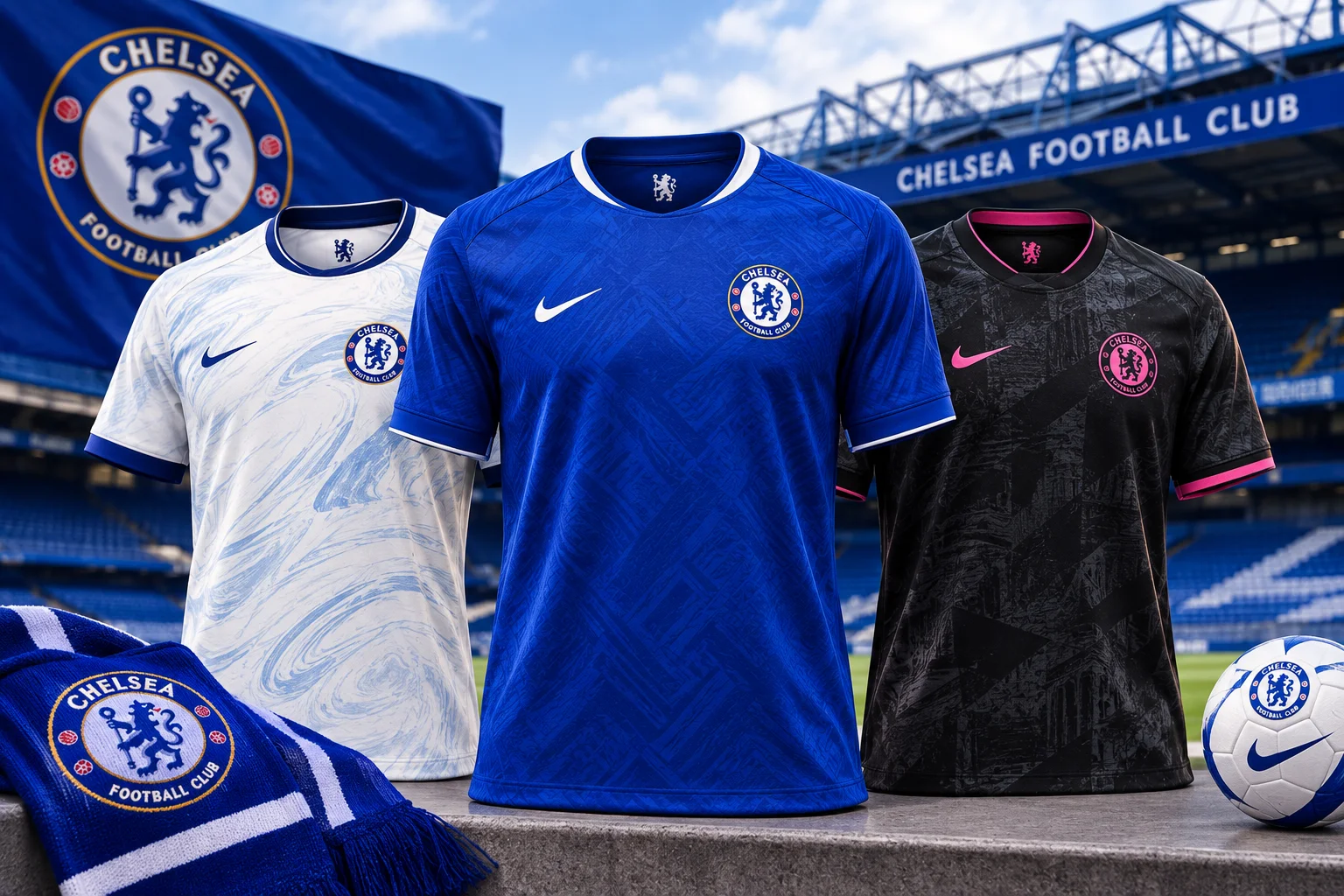
There is a difference between a shirt that looks good in a product photo and a shirt that still looks good three years later. Most buyers only find out which they bought well after the money has gone.
With Chelsea this is more pronounced than at most clubs, because the blue moves. Not dramatically, but enough that shirts from different eras sit noticeably apart when you line them up. That variation is the thing that makes some seasons age beautifully and others not at all.
Why the blue matters more than the design
Chelsea’s blue has been a deep royal, it has been brighter, and at points it has drifted towards a mid blue depending on the manufacturer and the year. Each version is legitimate. They are just different, and the difference is the first thing the eye registers.
A shirt in a shade that has since gone out of use reads as being from a specific era, which is exactly what you want from an older shirt. A shirt in a shade close to the current one but not quite matching reads as a bad copy. That is the line you are trying to stay on the right side of.
So when assessing an older shirt, check the blue against known photographs from that season rather than against the current kit. And check it is consistent within the shirt itself: sleeves matching the body, collar trim in the same family. Inconsistency there is a production fault and tells you about everything else.
What makes a Chelsea season worth buying?
A few things recur across the shirts people still want years later.
An unusual or short lived sponsor is the strongest single marker, because it pins the shirt to a narrow window and makes it easy to place. Long sponsorship runs blur together and the shirts from them become hard to tell apart.
A distinctive collar is the second. Collars change more than any other element between seasons, and a shirt with a collar treatment that was only used once stays recognisable. The third is a season people remember for what happened in it, which is less about the garment and more about what it represents.
Anyone browsing chelsea shirts across multiple years will notice those three factors explain most of why some seasons stay expensive and others sit in clearance.
Does the sponsor change what a Chelsea shirt is worth?
More than the design does, in resale terms at least.
Sponsorship deals run in blocks of several years, which means a sponsor pins a shirt to a window immediately. Short lived deals produce shirts that are easy to date and were made in smaller numbers across fewer seasons, and both of those things keep a shirt interesting. Long running deals produce a stack of shirts that blur into one another.
Nobody buys a shirt because of the company on the front. But it is the single most useful marker for working out how distinctive a shirt will feel in a decade, and it costs nothing to factor in while you are browsing.
Home, away or third: which ages best?
The home shirt is the default purchase and the one that dates fastest. It is always blue, the changes between years are small, and anyone who follows the club can place it within a season or two.
Away shirts are where the interesting decisions happen. Chelsea’s away kits have used yellow, white, black, and various things in between, and the good ones become the shirts people specifically hunt for. They are produced in smaller numbers, which compounds the effect.
Third kits are a narrower bet. They are designed to stand apart and sometimes succeed spectacularly. If you already own a home shirt, the third kit is usually the more interesting second purchase.
Should you buy current season or older?
Three genuinely different propositions, and they suit different buyers.
Current season
Full price, shortest shelf life, and the shirt everyone recognises right now. If being current is the point, that premium is what you are paying for and it is not wasted.
Last season
Almost always the best value in the market. Twelve months old, visually near identical to most people, and considerably cheaper. If you are buying a shirt to wear rather than to signal, this is where to look first.
Retro and older seasons
A different purchase entirely, bought for the design or the memory attached to it. These do not compete with the current shirt and should not be judged against it. Their appeal runs for years rather than months.
How do you check quality on an older shirt?
The checks are the same as for a new shirt, with one addition.
Crest attachment, stitching at the hem and cuffs, and visible fabric texture all still apply. What you add for an older shirt is a look at how the printing has held, if there is any, and whether the fabric has pilled. Polyester from older production runs can develop a rough surface after heavy wear, which does not affect how it fits but does affect how it looks.
Ask for photographs of the actual item rather than a stock image. For anything described as retro or vintage, a seller who cannot photograph the specific shirt is a seller you should be cautious with.
Getting the size right
Football shirt sizing does not match high street sizing, and older shirts complicate it further because cuts have changed considerably. Shirts from the 1990s were made far looser than anything produced now.
The reliable method is unchanged. Lay a shirt you own and like flat, measure armpit seam to armpit seam, and match that half chest figure against the seller’s chart. For older shirts this matters more, not less, since you cannot assume the size letter means what it means today.
What to actually buy
If you want one Chelsea shirt, buy last season’s home kit and pay considerably less than you would have in August. If you want something that stays interesting, find an away shirt from a season with a short lived sponsor. If you want the current one, wait until spring when the price drops.
And in all three cases, check the blue is consistent before you pay.
Leeds offer the opposite problem, where the colour never changes and everything else has to — our guide to buying Leeds United shirts covers how that works. For the full sweep of how the Chelsea kit has evolved, our piece on Chelsea shirts through the decades traces it season by season.
Frequently asked questions
Why do Chelsea shirts vary in shade of blue?
Manufacturers and dye formulations change over time, and each interprets the club’s blue slightly differently. Variation between seasons is normal. Variation within a single shirt is a production fault.
Which Chelsea season is the best buy?
For value, last season. For something that stays distinctive, an away shirt from a year with an unusual or short lived sponsor, since those are easiest to place and were made in smaller numbers.
Are older Chelsea shirts sized differently?
Yes, noticeably. Shirts from the 1990s and early 2000s were cut much looser than modern kits. Always check measurements rather than relying on the size letter.
Leave a Reply